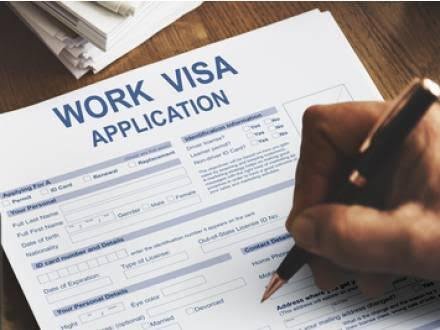
For people who want to work in another country, the immigration process can be confusing. One of the terms you are likely to encounter during an international job search is “employer-sponsored work visa.”
Although the exact meaning differs between countries, the basic idea is that an employer plays an important role in supporting a foreign worker’s authorization to work.
Some countries require employers to hold an approved sponsor status. Others use nomination, petition, labor-market, or work-permit systems. In some cases, an eligible job offer is a major requirement for the worker’s application.
Understanding the basic concept can help you evaluate international job opportunities more realistically.
What Does Employer Sponsorship Mean?
Employer sponsorship generally refers to a process in which an employer supports a foreign worker’s application to legally work in the country.
The employer’s responsibilities vary.
Depending on the immigration system, the employer may need to:
- Confirm the job offer
- Demonstrate that the position meets immigration requirements
- Hold an approved sponsor status
- Submit a nomination or petition
- Provide employment documents
- Meet salary or occupation requirements
- Complete labor-market procedures
- Pay certain government or administrative fees
The employee may then need to submit their own visa or work-permit application.
Therefore, sponsorship does not always mean that the employer completes the entire visa process on behalf of the worker.
Why Do Countries Use Employer Sponsorship?
Work-visa systems are designed to regulate who can legally work in a country.
Governments may want to ensure that foreign workers are filling genuine positions and that employers comply with employment and immigration rules.
Some systems also use occupation lists, salary requirements, labor-market tests, or numerical limits.
For example, the U.S. employment-based immigration system contains several categories, and certain employment-based immigrant cases require employer involvement before the worker can proceed with later immigration steps.
The specific rules are different in every country.
Does Every Sponsored Job Guarantee a Visa?
No.
A job offer and a visa approval are separate things.
An employer may be willing to support an application, but the worker must still satisfy the legal requirements of the relevant immigration category.
Depending on the country, authorities may assess qualifications, occupation, salary, work experience, health requirements, criminal history, documentation, or other factors.
Even when an employer has completed its part of the process, the employee may still need to submit a formal application and receive approval before beginning work.
This is why advertisements promising “guaranteed visas” should be treated carefully.
Who Is More Likely to Find Sponsorship?
There is no universal list of professions that guarantees sponsorship.
However, employers are more likely to consider international candidates when they have difficulty finding suitable workers locally or when a candidate has specialized qualifications.
Demand can change over time.
Technology, engineering, healthcare, scientific research, construction, education, and specialized trades are examples of fields that may have international recruitment opportunities in particular countries and periods.
Your experience level also matters.
An employer may be more willing to handle the additional administrative work associated with an experienced specialist than with a candidate who has no professional experience.
How to Search for Sponsored Jobs
Start by choosing your destination country.
Then research the work-visa routes available for your occupation.
Once you understand the basic requirements, identify employers that may be able to hire international workers.
Search company websites and reputable job platforms using combinations of your profession and terms such as:
“visa sponsorship”
“work permit”
“relocation”
“international applicants”
“skilled worker”
“immigration support”
Remember that not every employer uses the same terminology.
A company may support international recruitment without using the exact words “visa sponsorship” in every job advertisement.
What Should You Ask an Employer?
If you reach the interview stage, it is reasonable to ask about work authorization.
You can ask:
“Does the company consider candidates who require work authorization sponsorship?”
You can also ask whether sponsorship is available for the specific position.
Do not assume that a company-wide sponsorship policy applies to every job.
Some employers may sponsor only certain occupations, locations, salary levels, or experience levels.
Understanding the policy before accepting an offer can prevent misunderstandings later.
What Documents Might Be Required?
The exact documentation varies according to the destination and visa category.
Common documents can include:
- Passport
- Employment offer or contract
- Resume or CV
- Educational certificates
- Professional licenses
- Proof of work experience
- Language-test results
- Police or background documents
- Medical documentation where required
- Employer sponsorship or petition documents
- Passport photographs
Some professions require additional evidence.
Keep digital and physical copies of important documents and ensure names and dates are consistent across them.
If your documents are not in the required language, you may need an approved translation.
Do not assume that a simple online translation is acceptable for an official application.
What Happens After You Receive an Offer?
Receiving a job offer is an important milestone, but it may not be the end of the immigration process.
Depending on the country, the employer may need to complete its sponsorship, nomination, petition, or compliance requirements first.
You may then need to submit your visa application.
The process can include document submission, fees, identity checks, medical requirements, interviews, or other steps.
Processing times can change and should be checked through the official immigration authority rather than relying on an old blog post or social-media comment.
Can You Change Employers?
This depends entirely on the visa or work-permit category.
Some employment authorizations are closely tied to a specific employer. Others may allow greater flexibility after certain conditions are met.
Never assume that you can freely change jobs after arriving in a new country.
Before accepting an offer, understand what happens if:
- You resign
- Your employer terminates your contract
- Your job changes substantially
- You receive a promotion
- You want to work for another company
- Your employer stops sponsoring workers
Changing employers may require a new application, notification, transfer process, or new authorization.
What About Family Members?
Some work-visa programs allow eligible spouses or children to accompany the primary worker.
However, family rights vary considerably.
A dependent may or may not receive work authorization depending on the destination country and visa category.
Before relocating with your family, research:
- Dependent eligibility
- Application requirements
- Healthcare access
- Schooling
- Housing
- Work rights for spouses
- Visa duration
- Renewal conditions
These factors can significantly affect the practical value of an overseas job offer.
How to Avoid Sponsorship Fraud
One of the most important things to remember is that legitimate employment and immigration processes should be verifiable.
Be cautious if someone:
- Guarantees a visa
- Guarantees a job without an interview
- Demands immediate payment
- Requests cryptocurrency
- Asks you to deposit money to receive wages
- Refuses to identify the employer
- Uses unofficial email addresses
- Sends suspicious documents
- Pressures you to make a decision immediately
Research the company independently.
Check official government information about the relevant visa route.
If you are considering professional immigration assistance, verify that the person or organization is authorized to provide the services they advertise in the relevant jurisdiction.
Conclusion
Employer-sponsored work visas can provide an important pathway for qualified professionals who want to build careers abroad.
However, sponsorship is not a universal process. Each country has its own rules, and the requirements can differ by occupation, employer, salary, qualifications, and visa category.
The best approach is to research before applying, target employers that genuinely recruit internationally, maintain accurate documentation, and verify immigration information through official sources.
A job offer can open the door, but you still need to meet the legal requirements to work in your destination country.